Bathroom Fan Leaking When It Rains? Roof Vent Flashing Fixes
Water dripping from your bathroom fan when it rains? Learn the most common roof vent flashing problems and how roofing pros track down and fix these leaks.
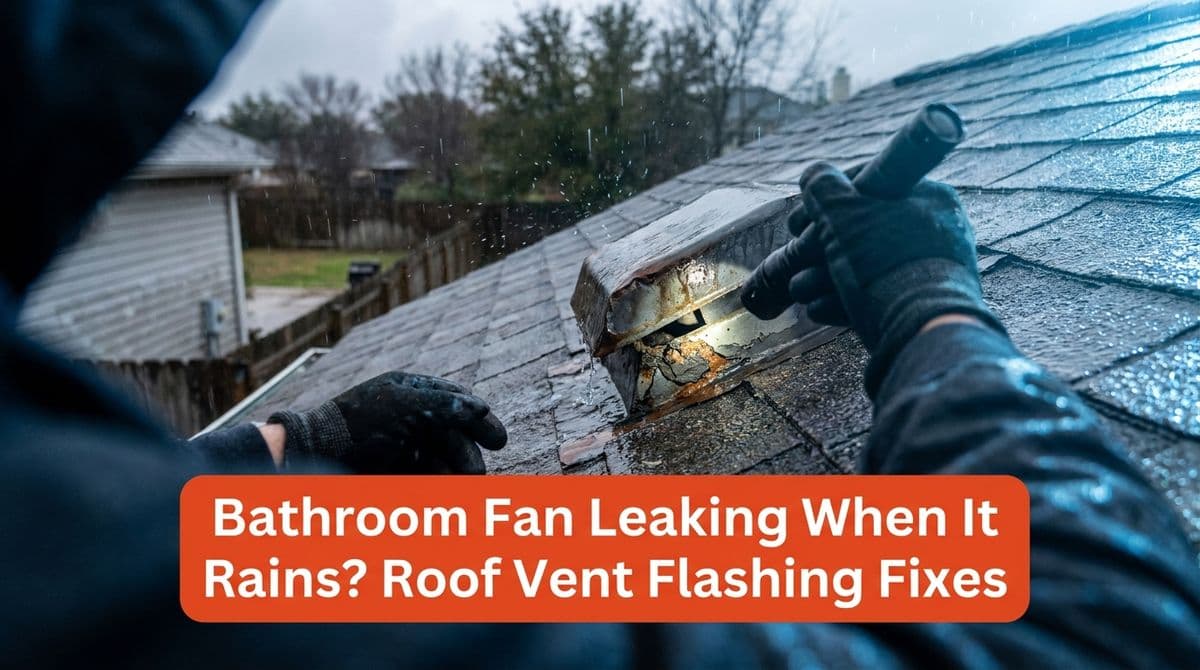
Why Is My Bathroom Exhaust Fan Leaking When It Rains?
We recently got a call from a customer — let’s call him Mark — who was pretty frustrated. Every time it rained, water started dripping right through the bathroom exhaust fan in his hall bath. He’d already had the roof checked a couple of times in the past, so he was understandably wondering, “Why is this still happening?”
As a local roofing company, we see this exact scenario all the time. When someone tells us, “Water is coming through my bathroom vent fan,” our ears perk up, because that usually points us straight toward the roof penetration and vent flashing, not the shingles themselves. In this post, we’ll walk you through what we explained to Mark and how we typically diagnose and fix this kind of leak.
How a Bathroom Exhaust Fan Connects to Your Roof
First, it helps to understand what’s going on above your ceiling. In most homes, the bathroom exhaust fan:
- Pulls humid air from the bathroom
- Sends that air through a metal or flex duct in the attic
- Exhausts it outside through a dedicated roof vent or wall vent
That roof vent is a hole in your roofing system — and any hole through the shingles needs to be carefully sealed and protected with flashing, sealant, and proper shingle overlap. If anything is off with that vent or its flashing, rain can sneak in and follow the path of least resistance… which is often right down into the bathroom fan.
Common Reasons Your Bathroom Fan Leaks When It Rains
When we come out on a call like Mark’s, these are the main issues we look for around the bathroom fan vent:
1. Cracked or Deteriorated Roof Vent Flashing
Most roof vents have a metal base and a rubber or metal collar where the duct passes through. Over time, UV rays, temperature swings, and simple age can cause that rubber to:
- Crack or split
- Pull away from the pipe or duct
- Dry out and lose its seal
When that happens, rain can get under the vent and into the roof deck. From there, it travels along framing or the duct itself and eventually shows up as a leak at the fan grille.
2. Loose or Damaged Vent Hood
Sometimes the vent cover (also called the hood or cap) gets loose, bent, or rusted. High winds, hail, or even critters can damage it. If the hood isn’t sitting flat or is missing fasteners, wind-driven rain can blow right up under it and into the duct opening.
3. Poorly Installed Shingles Around the Vent
Even if the vent itself is in decent shape, the surrounding shingles and underlayment have to be installed correctly. We often find:
- Shingles not properly lapped over the flashing
- Nail heads exposed in front of the vent, creating little “funnels” for water
- Underlayment cut too high or not sealed around the vent
All of that can allow water to run under the shingles and find its way down to your bathroom ceiling.
4. Condensation (Moisture Inside the Duct)
Not every drip at a bathroom fan is a true roof leak. In colder weather, we sometimes discover it’s actually condensation forming inside an uninsulated duct. Warm, moist air from showers hits the cold metal duct in the attic, turns to water, and then drips back down through the fan.
The key difference: condensation-related drips typically show up more with long, hot showers and cold outdoor temps, while flashing leaks are worse during or right after rain.
How We Diagnose a Bathroom Fan Roof Leak
When we went out to Mark’s home, we followed the same steps we use on every call like this. If you schedule a service visit with us for a similar issue, here’s what you can expect:
- Interior check: We start in the bathroom, removing the fan cover to look for obvious water trails, staining, or rust.
- Attic inspection (when accessible): We locate the fan and duct in the attic, check connections, look for wet insulation or wood, and trace where the moisture is coming from.
- Roof inspection: We get on the roof, find the vent that lines up with that bathroom, and examine the vent cap, flashing, shingles, and sealant.
- Water testing (if needed): In tricky cases, we may carefully run water over specific areas of the roof vent to see exactly where it penetrates.
By the time we’re done with these steps, we can tell you whether you’re dealing with a true roof leak, a vent or flashing issue, or a condensation problem inside the duct.
How Pros Fix Leaking Bathroom Fan Vents
Once we’ve pinpointed the cause, here are the most common repairs we perform:
1. Replacing the Roof Vent and Flashing
If the vent is cracked, rusted, or poorly designed, we usually recommend replacing the entire vent assembly. That involves:
- Removing shingles around the existing vent
- Taking out the old vent and flashing
- Installing a new vent with proper underlayment and nail placement
- Re-shingling and sealing around the new vent
This is the most reliable way to stop repeated leaks and give you a longer-term fix instead of band-aid caulking.
2. Resealing and Securing the Current Vent
If the vent itself is still in good shape, we may be able to:
- Reseal small gaps and nail holes with high-quality roofing sealant
- Secure any loose fasteners or replace missing ones
- Straighten or re-seat a vent that was slightly lifted
We’re honest about this during the visit: resealing is best when the vent is sound and the roof is still within its normal life. On an older roof, replacement is often the smarter call.
3. Fixing Condensation Issues
If we discover condensation instead of a true leak, we focus on the duct itself:
- Adding or improving insulation around the duct in the attic
- Shortening overly long duct runs when possible
- Making sure the duct actually terminates at an exterior vent and isn’t just dumping into the attic
We may also suggest using the fan longer after showers to help clear humidity and reduce moisture buildup.
How Bathroom Fan Leaks Tie Into Overall Roof Health
One thing we always point out to homeowners like Mark is that a “small” leak at a bathroom fan can be an early warning sign about the overall condition of the roof system. Roof penetrations — vents, pipes, skylights — are common failure points as a roof ages.
If we find brittle shingles, multiple cracked flashings, or old sealant around other penetrations during a fan leak call, we’ll let you know. Fixing just the one vent may solve today’s problem, but it’s worth understanding whether the rest of the roof is nearing the end of its life so you can plan ahead.
What You Can Do Before We Arrive
While you’re waiting for us (or any roofer) to come out, here are a few safe steps you can take inside:
- Protect the area: Put a bucket or towel under the fan if dripping is active.
- Don’t poke holes blindly: If you see a bubble in the paint, don’t start cutting into the drywall without knowing where wires and fan housing are.
- Note when it leaks: Pay attention to whether the leak only happens in heavy wind-driven rain, every rainfall, or mainly in cold weather. That info helps us diagnose faster.
When to Call a Roofer vs. an Electrician
Homeowners often ask us, “Do I call a roofer or an electrician for this?” Here’s how we typically break it down:
- Start with a roofer if water is clearly tied to rain or snow. The most likely culprit is the roof vent or flashing.
- Call an electrician if the fan won’t turn on, trips the breaker, or you suspect internal electrical damage after a leak. We frequently coordinate with electricians when both issues are present.
In Mark’s case, the problem turned out to be aging vent flashing that had finally failed. We replaced the vent, re-shingled the area correctly, and after the next big storm, his hall bathroom stayed completely dry.
Think Your Bathroom Fan Leak Is Coming from the Roof?
If you’re seeing water drip from your bathroom exhaust fan when it rains, there’s almost always a roof-related reason behind it. At our roofing company, we deal with these leaks constantly, and we know exactly where to look and how to fix them so they don’t keep coming back.
Don’t wait until the ceiling stains spread or mold becomes an issue. Reach out to a qualified roofing pro, and let us track down the source, explain your options clearly, and get your bathroom — and your roof — back in good shape.