Broken Roof Tiles After a Storm: Costs & Next Steps
Found a broken roof tile after a storm? Learn what to do first, when it’s an emergency, and how roofers typically price tile repairs.
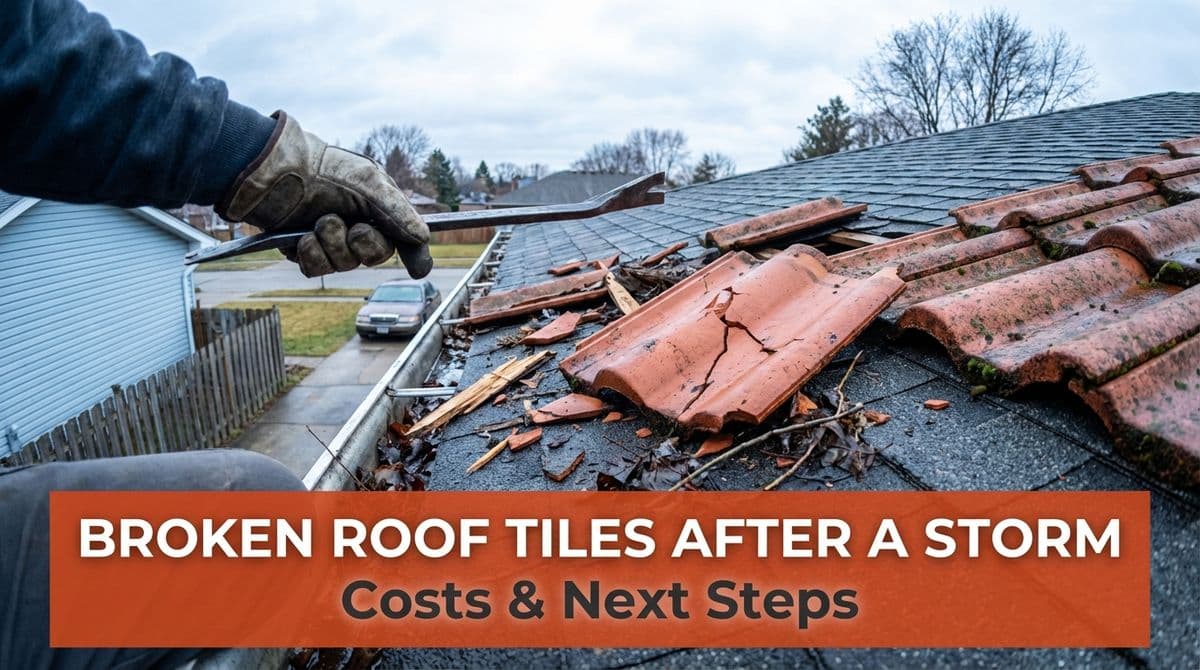
When a Storm Knocks a Tile Loose
We recently got a call from a homeowner — let’s call him Mark — who walked out after a windy night and found a broken roof tile on the ground. He could see another cracked piece right up near the peak and wasn’t sure how bad it really was. His first questions were the same ones we hear all the time: “Is this an emergency? How do you handle this? And what do you charge?”
Situations like Mark’s are very common after a storm. One or two tiles slide, crack, or blow off, and suddenly you’re wondering if water is pouring into your attic. Let’s walk through what homeowners should do, when broken tiles are serious, and how we typically price these repairs.
First Steps When You Find a Broken Roof Tile
When Mark called, he told us he’d picked up one tile that was “on the ground all cracked” and could see another damaged one at the edge of the roof. Here’s what we advised — and what we suggest you do too.
- Stay off the roof. Tile roofs can be slippery and fragile. Walking on them the wrong way can crack more tiles and put you at risk of a fall.
- Take clear photos from the ground. Step back, zoom in, and get wider shots of the affected slope. This helps us understand what’s going on before we arrive.
- Look inside for leaks. Check ceilings directly under the damaged area, especially after rain. Look for stains, bubbling paint, or damp insulation in the attic if it’s safely accessible.
- Save the broken pieces. If you can do so safely, hang on to any intact pieces. Sometimes we can reuse them or at least use them to match tile type and color.
Once Mark had done those basics, we scheduled him for the next day. In busy storm seasons, we group nearby homes (like his neighborhood) so we can get to everyone faster.
When a Broken Tile Is an Emergency
Not every broken tile means your roof is about to fail, but some situations need quick attention. On our call with Mark, we asked a few key questions you can ask yourself:
- Is the underlayment exposed? If you can see black felt or synthetic underlayment from the ground, that area is more vulnerable to leaks.
- Is there active leaking inside? Any dripping, ceiling stains growing quickly, or wet drywall after rain turns it into an urgent issue.
- How many tiles are missing? One or two tiles are usually a small repair. Large patches of missing or shifted tiles can signal wind damage to the whole section.
- Where is the damage located? Tiles broken near ridges, valleys, chimneys, or edges (like Mark’s) can let water into more sensitive areas.
For true emergencies — lots of missing tiles, visible underlayment flapping, or indoor leaks — we’ll try to tarp or temporarily protect the area first, then schedule permanent repairs when weather allows.
What We Do During a Tile Roof Inspection
When Mark asked, “How do you operate?” we explained that we can’t give an honest price without seeing the roof. Here’s what a typical visit looks like:
- Safety and access check. We make sure we can safely access your roof and set up ladders without damaging landscaping.
- Roof-level inspection. We inspect the visible damage plus surrounding tiles, the ridge or edge where the tile came from, and any spots where water naturally flows.
- Check for hidden issues. We look for cracked underlayment, broken battens, or prior DIY repairs that could affect the fix.
- Photos and explanation. We take pictures and review them with you, so you can see exactly what’s going on up there.
Only after we’ve seen the full picture do we give a written price, so you’re not surprised later by “add-ons” once work starts.
How Broken Tile Repairs Are Priced
Mark’s main concern was cost: “What do you guys charge?” While every house is different, here are the factors that go into our pricing for broken tiles after a storm:
1. Number of Tiles and Scope
Replacing one to three tiles in an easy-to-reach spot is on the low end of cost. When there are multiple areas with damage, or tiles scattered across several slopes, the price increases with labor time.
2. Access and Roof Height
A single-story home with simple access is faster (and cheaper) to work on than a steep, two- or three-story roof where we need extra safety measures or equipment.
3. Tile Type and Availability
We always ask homeowners, like we did with Mark, if they know their tile type or still have extra pieces from when the house was built. Costs can vary depending on:
- Material: Concrete, clay, or specialty tiles all have different price points.
- Matching: Older or discontinued tiles can be harder to match, sometimes requiring “harvesting” tiles from less-visible areas of your roof.
4. Underlayment or Structural Damage
If the storm only cracked the tile, the repair is straightforward. If water has already damaged the underlayment or wood below, we may need to lift a section of tiles, repair the substrate, and relay them. That adds time and materials and will be reflected in the quote.
What You Can Expect From Us
With Mark, we scheduled for late morning the next day and explained that our technician would call when he was on the way. That’s our normal process:
- We schedule a visit window and confirm you’re the homeowner.
- Our technician calls before arrival.
- We inspect, take photos, and explain what we find in plain language.
- We provide a clear price before any repair work begins.
For minor storm damage, we can often complete the repair on the same visit if we have the right tiles and materials on hand. For specialty tiles, we may need to order parts or schedule a follow-up.
When to Call a Pro About Broken Tiles
If you’ve found a tile on the ground, see a crack at the peak like Mark did, or your neighbors are mentioning roof issues after a storm, it’s worth having a professional look. Tile roofs are durable, but their job is to protect the waterproof layer underneath. Leaving broken tiles in place can turn a simple, affordable repair into a larger project over time.
If you’re unsure whether your situation is urgent, take a few photos from the ground and reach out. We’ll talk through what you’re seeing, let you know how soon you should address it, and get you on the schedule if needed.