Cupola & Roof Vent Repair After a Windstorm
Wind blew off your cupola or roof vent? Learn how we inspect, repair, replace, and properly flash decorative roof structures after a storm.
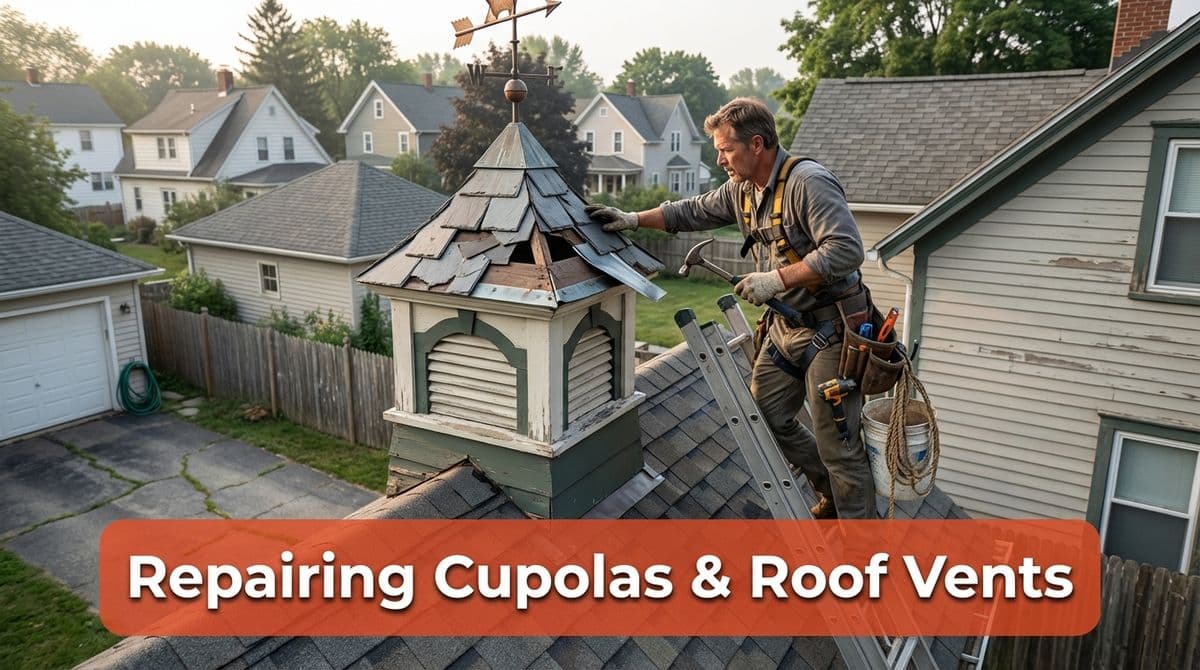
When a Windstorm Takes Your Cupola for a Ride
We recently got a call from a homeowner — let's call him Jim — who had a rough night with one of our classic Colorado windstorms. The next morning, he walked out to his shop and noticed something was very wrong: the decorative cupola that used to sit proudly on top of his barn roof was simply… gone.
Jim explained that the original cupola, about 3' x 3' with a weather vane on top, had blown off. His roofing contractor told him, “You need someone who really understands vent flashing and metal work,” which is how he ended up on the phone with our team asking, “Can you build a metal roof for a cupola and reinstall it safely?”
As we talked through his options, our team thought it would be helpful to share the same guidance we walked through with Jim — because wind-damaged cupolas, roof vents, and other decorative roof structures are more common (and more serious) than many homeowners realize.
What a Cupola and Roof Vent Actually Do
Before we talk repairs, it helps to understand what a cupola or roof vent is supposed to be doing on your roof.
A decorative cupola like Jim’s might look like a small, pretty “mini-barn” on top of the main structure, but it usually serves at least one of these purposes:
- Ventilation: Letting hot, moist air escape from the attic or barn
- Protection: Keeping rain, snow, and pests out while air moves through
- Decoration: Adding character with features like a weather vane or windows
Roof vents, turbine vents, and even some decorative dormers all play similar roles: they penetrate the roof surface and must be carefully flashed to keep that penetration watertight.
First Steps After a Cupola Blows Off in a Windstorm
When Jim called us, his biggest concern was: “Is my roof leaking now that the cupola is gone?” That’s the right question to ask. Anytime a storm rips something off the roof, we recommend a quick checklist:
- Stay on the ground. If you can see obvious damage from the yard or driveway, that’s enough to know you need an inspection. Don’t climb up on a storm-damaged roof.
- Look for missing materials. Shingles, metal panels, or trim missing around the area where the cupola or vent used to be are red flags.
- Check inside below the damage. Look in the attic or under the roof deck for damp insulation, water stains, or daylight showing through.
- Document what you see. Take photos from multiple angles for insurance and for the roofing crew.
In Jim’s case, the entire cupola had blown off, which meant we needed to check both the opening it left and the surrounding roofing where fasteners and flashing used to be.
Repair, Replace, or Remove? How We Decide
Jim’s question to us was very specific: could we create a new metal cupola roof, about 3' x 3', reinstall it on his barn, and include his weather vane on top? That’s actually a more common scenario than it sounds, and the answer is usually yes — but with a careful evaluation first.
When we come out to look at a damaged cupola or roof vent, our team walks through three main options:
- Repair: If the structure is mostly intact, we may be able to reattach it, reinforce it, and install new flashing and sealants to bring it back to code and wind rating.
- Replace: If the cupola is twisted, rotted, or poorly built, we often recommend fabricating a new metal unit (or cap/roof for the cupola) sized to your roof and properly engineered for wind.
- Remove and patch: If the cupola was purely decorative and the homeowner no longer wants it, we can permanently flash over and re-roof the opening so it looks clean and stays watertight.
For Jim, we talked through a custom metal solution that would be strong enough to handle our local wind gusts, support his weather vane, and tie cleanly into his existing barn roof.
Why Flashing Matters So Much Around Cupolas and Vents
Jim’s original contractor sent him our way specifically because he knew this wasn’t just about “building a little metal box.” The real key is flashing — the metal (or sometimes membrane) pieces that bridge between the roof surface and the cupola or vent.
On a proper installation, we pay close attention to:
- Base flashing: Custom-formed metal that runs up under the roofing and up the sides of the cupola base.
- Counterflashing: Overlapping pieces that cover the top edges of base flashing to shed water.
- Fastening pattern: Correct type, size, and spacing of screws or nails rated for high winds.
- Sealants and underlayment: Secondary waterproofing under the metal and around fastener penetrations.
When these pieces are undersized, installed out of sequence, or skipped altogether, wind can catch the edges, water can sneak in, and the whole assembly becomes vulnerable — exactly what we suspect happened to Jim’s original cupola.
Features to Consider When Replacing a Decorative Roof Structure
If you’re rebuilding a storm-damaged cupola or roof vent, it’s a great time to upgrade some features. With Jim, we walked through options like:
- All-metal construction: Steel or aluminum sides and roof for better longevity than wood in our climate.
- Stronger attachment: Through-fastened brackets tied into structural framing, not just sheathing.
- Integrated venting: Louvered or screened openings if you want real airflow, not just decoration.
- Weather vane reinforcement: A dedicated mounting plate or post that runs through the cupola to structural framing below.
- Matching roof profile: Panels and colors that blend with your existing shingles or metal roof for a seamless look.
Our goal is always to make the new piece look like it belongs on your roof and perform better than whatever the windstorm took out.
When to Call a Pro About Your Cupola or Roof Vent
If you’ve just been through a windstorm and notice your cupola is leaning, missing, or rattling, it’s time to get eyes on it. Here’s when we recommend you bring in a roofing professional:
- You can see gaps, lifted flashing, or exposed wood around the base
- The cupola or vent is visibly loose or tilting
- You hear banging or flapping noises in high winds
- You see water stains or fresh drips inside after rain
Our team can inspect the damage, document it for insurance if needed, and recommend whether a repair, replacement, or removal makes the most sense — just like we did for Jim.
If you’re worried about a cupola, roof vent, or any decorative structure that sits on your roof, we’re always happy to take a look, talk through your options, and make sure your home or shop is both protected and looking its best.