Flat Roof Leaks After Heavy Rain: What to Do Next
Flat roof leaking after a heavy rain? Learn common causes, early warning signs, safe stop‑gap steps, and what to expect from a professional flat roof inspection.
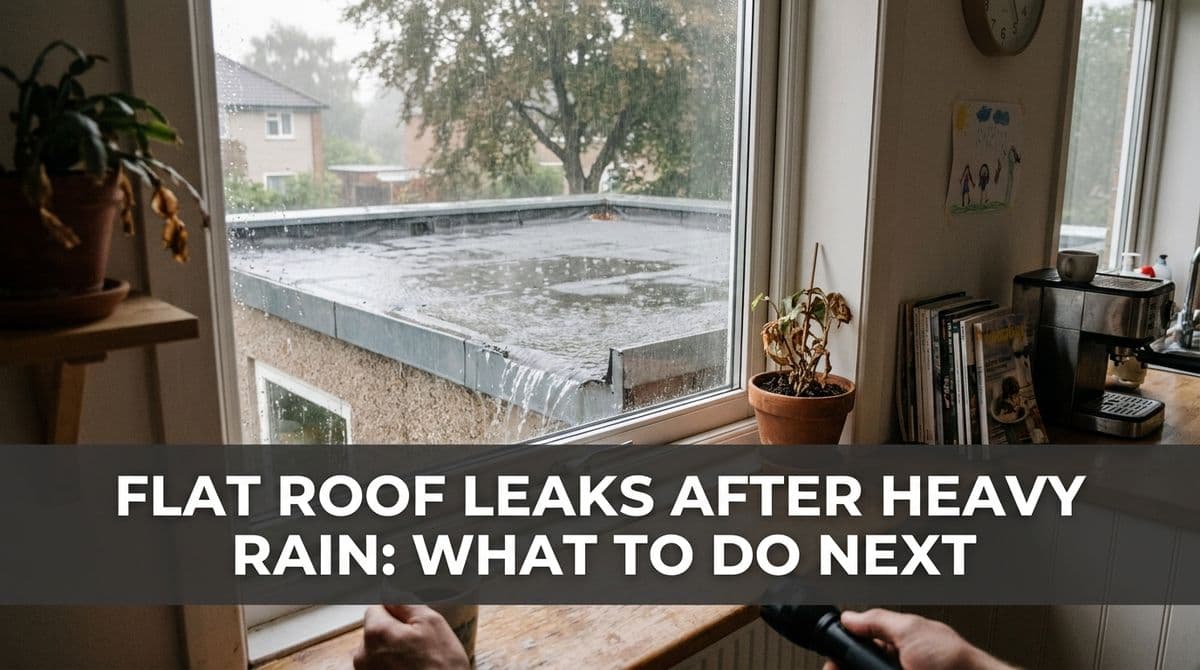
When a Flat Roof Starts Leaking After Heavy Rain
We recently got a call from a homeowner — let's call him David — right after a big overnight storm. David told us, “We’ve got a residence, but it has flat roofs, and new leaks just showed up last night when it rained.” He was clear that it wasn’t an emergency, but any new leak on a flat roof is still a serious red flag.
We see this situation a lot: the rain stops, the leaks show up, and homeowners wonder, “Is my roof failing? Do I need to panic? What do I do right now?” In this guide, we’ll walk you through why flat roofs on homes tend to leak after heavy rain, how to spot early warning signs, what’s an emergency (and what isn’t), safe stop‑gap measures you can take, and what to expect when we come out for a professional flat roof inspection and repair.
Why Flat Roofs on Homes Leak After Heavy Rain
Residential flat roofs don’t actually stay perfectly flat over time. Sun, temperature swings, and settling can all cause subtle dips and “birdbaths” where water collects. During a light shower, that may not matter much. But once you get a long or intense rain, the weaknesses start to show.
Some of the most common causes we find on homes like David’s include:
Ponding water – Standing water that lingers more than 24–48 hours can work its way into tiny seams, pinholes, or cracks. Over time, this breaks down roofing materials.
Aging or sun‑damaged membrane – On older flat roofs, the surface can crack, blister, or shrink, especially around edges and penetrations.
Failed seams and flashing – Where two roof sections meet, or around skylights, chimneys, and vents, the sealant or welded seams can separate and let water in.
Clogged drains, scuppers, and gutters – Leaves and debris keep water from escaping. That added weight and standing water will find the weakest spot.
DIY patches or past repairs – Quick fixes with the wrong materials often don’t move with the roof properly and can crack open during a downpour.
Heavy rain is usually not the root cause; it just exposes problems that have been building for a while.
Early Warning Signs Your Flat Roof Is in Trouble
David called us as soon as he noticed new drips inside, which was the right move. Many homeowners only call after significant interior damage has already happened. There are a few early signs you can look for before it gets to that point:
Ceiling stains or discoloration – Yellow or brown water spots on ceilings or high on walls, even if they’re dry now.
Bubbling or peeling paint – Moisture behind paint or drywall can cause it to swell, crack, or blister.
Musty odors – Persistent musty smells in top‑floor rooms or attics can mean hidden moisture.
Visible ponding on the roof – If you can safely see the roof (from a window or the ground), look after rain. Large puddles that don’t drain within a day are a concern.
Loose or cracked sealant – Around vents, pipes, skylights, or along parapet walls, dried or separated sealant is a common leak source.
If you spot any of these, it’s time for a professional to take a closer look, even if water isn’t actively dripping inside yet.
Is It an Emergency or Can It Wait?
One of the first things our office asked David was, “Is it an emergency leak, are you needing someone out there urgently?” That’s a question we ask every homeowner, because it helps us prioritize the schedule and protect your home.
When a Flat Roof Leak Is an Emergency
Water is actively pouring in or filling buckets quickly.
Leaks are near electrical panels, light fixtures, or outlets.
There’s visible sagging in the ceiling, bulging drywall, or signs that the ceiling might collapse.
You hear dripping or see water inside a wall cavity.
In these situations, we treat it as urgent. Turn off power to affected areas if it’s safe to do so, move belongings out of the way, and call for emergency service.
When It’s Probably Not an Immediate Emergency
Slow drips into a bucket that stop once the rain ends.
Small ceiling stains with no active dripping.
Minor dampness in an attic or top‑floor closet.
That was David’s situation. It still needs attention, but we can usually schedule a visit in a normal time frame instead of sending a crew out in the middle of a storm.
Safe Stop‑Gap Measures Homeowners Can Take
Before we arrive, there are a few things you can safely do from inside the home to minimize damage. We never recommend that homeowners walk on a flat roof during or right after a storm; it can be slippery, and you could accidentally cause more damage.
Control the water – Place buckets, towels, or plastic bins under active drips. Empty them regularly.
Relieve pressure in bulging paint – If you see a swollen “bubble” in the ceiling or wall, put a bucket under it and use a small nail or pin to carefully puncture the lowest point so water can drain in a controlled way. This can reduce the risk of a sudden ceiling collapse.
Protect your belongings – Move furniture, rugs, and electronics out of the affected area. Lay down plastic sheeting or trash bags if needed.
Document the damage – Take photos and short videos of the leak and any staining for insurance purposes.
What we don’t want you to do is climb up with tarps, hardware‑store roof cement, or makeshift patches on a wet, possibly damaged roof. Leave that part to us.
What to Expect From a Professional Flat Roof Inspection
When we schedule a flat roof visit like the one we arranged for David, our goal is to do more than just stop the current drip. We want to understand the full picture and help you prevent future leaks.
Here’s what typically happens during an inspection:
Interior assessment – We start inside, noting where leaks and stains show up. This helps us trace the likely paths of water.
Exterior roof walk‑through – On the roof, we carefully check for ponding areas, punctures, blisters, open seams, and any damage around drains, vents, skylights, and edges.
Drainage check – We look at scuppers, internal drains, and downspouts for clogs or design issues that keep water from leaving the roof.
Photo documentation – We take photos so we can show you exactly what we’re seeing and explain our recommendations.
Repair options – Depending on what we find, we’ll outline options ranging from targeted patching and resealing to larger section replacements or, in some cases, a full flat roof replacement plan.
We’ll also talk about the age of your current roofing system, the type of material (modified bitumen, TPO, EPDM, etc.), and realistic expectations for how long repairs should last.
Staying Ahead of Future Leaks
Once we’ve taken care of the immediate issue, we usually recommend a simple maintenance plan for residential flat roofs:
Routine checkups every 1–2 years, or after major storms.
Seasonal cleaning of drains, scuppers, and gutters to keep water moving.
Sealant and flashing touch‑ups before they dry out and crack.
Monitoring ponding areas and, if needed, improving drainage or adding tapered insulation.
If your home has a flat roof and you’ve noticed new stains or leaks after heavy rain, don’t wait for the next storm to “see if it happens again.” That’s exactly how a small issue turns into major interior damage. Reach out, and we’ll help you figure out whether it’s urgent, what’s really going on up there, and the best way to get your roof back to protecting your home the way it should.