Hail Just Hit: How to Tell If Your Roof Has Damage
Hail just hit your neighborhood? Learn what hail does to asphalt shingles, why leaks can be delayed, what to look for from the ground, and when to call a roofer.
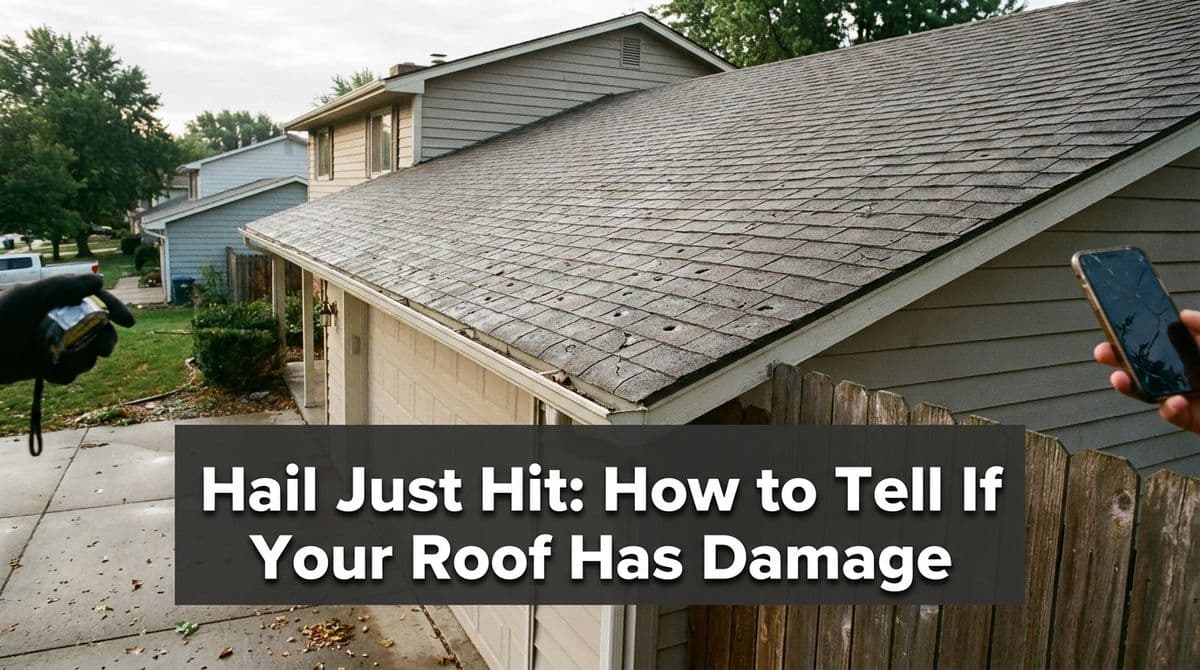
Hail Just Hit Your Neighborhood — Now What?
We recently got a call from a homeowner — let’s call him Tom — who lives just outside town. A hailstorm had rolled through his neighborhood the week before. He told us something we hear a lot this time of year:
“We had some pretty good hail. A bunch of roofers have already come by, but I’d rather work with someone local. I’m not seeing any leaks yet, but I’d like to know if there’s damage.”
Tom’s roof was about 15 years old, with a screened-in porch section that was closer to 10 years old. No obvious leaks, no missing shingles — just that nagging question: did the hail actually hurt the roof?
If you’re in the same boat after a recent storm, this guide is for you.
What Hail Really Does to an Asphalt Shingle Roof
When hail hits an asphalt shingle roof, the damage is usually more subtle than big holes or missing pieces. The main problems we see are:
- Granule loss – Those tiny sand-like granules on your shingles protect the asphalt from UV and weather. Hail can knock them off in circular or random patches.
- Bruising – The impact can crush the shingle from underneath, leaving a soft spot you can feel by touch, even if it looks okay from the ground.
- Cracks or fractures – Larger hail or high winds can crack shingles, especially on older roofs.
The tricky part is that much of this damage is not obvious from the yard, and it doesn’t always cause an immediate leak. Instead, it speeds up the aging of the roof so problems show up months or years later.
Why You Might Not See Leaks Right Away
One of the first questions we asked Tom was whether he’d seen any water spots on ceilings or around light fixtures. His answer is the same as many homeowners: “None that I know of.”
That doesn’t mean the roof is in the clear. Hail damage can be like a slow leak in your car tire:
- Shingles lose granules and become more brittle over time.
- Small cracks open up with heat, cold, and more storms.
- Underlayment and flashing can be stressed without fully tearing… yet.
The result? Water may not find a clear path inside until the next heavy, wind-driven rain or snowmelt. By the time you see a stain on the ceiling, the damage to the roof system and insulation may be much more extensive.
Safe Ground-Level Checks You Can Do After Hail
We never recommend homeowners climb onto their roof after a storm — it’s slippery, steep, and easy to miss subtle damage. But there are safe checks you can do from the ground to decide whether to call us out.
Walk the property and look for impact clues
Start by checking items at eye level that took the same hail as your roof:
- Gutters and downspouts: Look for fresh dents, dings, or chipped paint.
- Siding and window trim: Check for cracks, chips, or new marks on softer materials.
- Decks, railings, and patio covers: Look for hail splatter marks or indentations.
If these surfaces are clearly dinged up, there’s a good chance the shingles took a beating too.
Look up at the roof from the ground
From a safe spot in your yard, take a slow look over the roof:
- Dark or bare-looking spots where granules appear worn off in patches.
- Shingles that look bruised or scuffed, especially below roof vents or on slopes that faced the storm.
- Loose or hanging shingles at the edges or around the porch roof.
Binoculars can help, but if you’re unsure what you’re seeing, that’s exactly when a professional inspection pays off.
How Roof Age Affects Hail Damage and Insurance
When Tom told us his main roof was about 15 years old and the porch about 10, that immediately shaped how we thought about his situation. Roof age matters for two big reasons: how easily it’s damaged and how insurance responds.
10–15-year-old roofs: the “gray area”
Most asphalt shingle roofs in our area are rated for around 20–30 years, but hail can shorten that life. Around the 10–15-year mark, shingles are:
- Less flexible and more brittle.
- Already missing some granules from normal weathering.
- More likely to crack when hit by hail.
Insurance companies know this. Policies often have different rules or payouts for older roofs, including:
- Actual cash value (ACV) coverage that subtracts depreciation based on age.
- Higher deductibles for wind and hail claims.
- Stricter standards for what counts as “replacement-worthy” damage.
This is why a thorough, documented inspection from a local roofer matters so much. We can show where hail shortened the roof’s remaining life, even if it’s not leaking yet, and help you decide if a claim makes sense for a 10–15-year-old roof.
When to Call a Local Roofer for a Professional Inspection
Tom did exactly what we recommend after a good hailstorm: he called a local company and asked for a professional inspection, even though he hadn’t seen leaks yet.
We suggest you reach out for an inspection if:
- Hail was pea-sized or larger and lasted more than a few minutes.
- Neighbors are talking about roof or car damage.
- You see dents in gutters, downspouts, or metal trim.
- Your roof is 10–15 years old or older, even if it “looks fine” from the yard.
- You’re unsure whether to file an insurance claim and want an honest opinion first.
During an inspection, we typically:
- Check every slope of the roof for hail hits, bruising, and fractures.
- Inspect flashing, vents, skylights, and chimneys for hidden damage.
- Look in problem-prone areas like valleys and around additions or porch tie-ins.
- Document what we find with photos and straightforward explanations.
Don’t Wait for the First Leak
By the time water stains show up on your ceiling, the damage is already done. If hail just hit your neighborhood, your roof is 10–15 years old, or you’re seeing dents on gutters and trim, it’s a smart move to have us take a look.
We live and work right here in the community, and we treat every inspection like we’re looking at our own home. If your roof is fine, we’ll tell you. If it’s not, we’ll explain why, what your options are, and whether it may be worth talking to your insurance company.
After a hailstorm, peace of mind usually starts with a simple, professional roof inspection — before the leaks ever show up.