High Winds Damaged Your Roof Vents? When to Call for Inspection
High winds can rip off roof vents and leave your home vulnerable. Learn how to spot vent damage safely and when to call a roofer for a professional inspection.
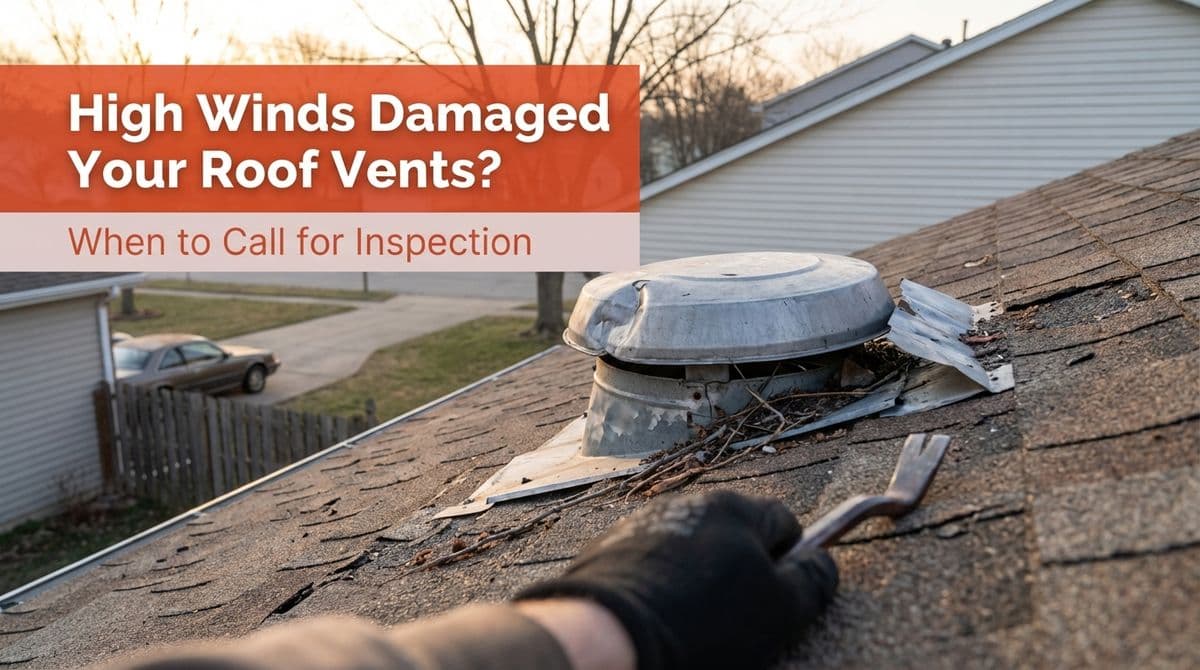
When High Winds Rip Off Roof Vents: What We Look For
We recently got a call from a homeowner — let’s call him Mark — right after a night of strong winds. He said, “I think one of the vent covers on my roof blew off, but I’m not exactly sure. I’d like someone to come out and inspect the roof for me.”
That type of call is very common after windstorms. From the ground, you might just notice something looks “off” or you hear a new noise when it’s windy, but you can’t quite tell what’s going on up there. That’s exactly when a quick roof vent inspection can save you from much bigger problems like leaks, mold, or even critters getting into your attic.
In Mark’s case, we scheduled an inspection (he didn’t even need to be home) and walked him through what we’d be looking for. I thought it would be helpful to share that same guidance with you, so you know how to spot roof vent problems after high winds and when it’s time to call a roofer.
First Things First: What Do Roof Vents Actually Do?
Before we talk damage, it helps to know what those little “mushrooms” and “boxes” on your roof are doing.
Roof vents are there to move air and moisture out of your home. They help:
- Release heat from your attic in summer so shingles last longer and your AC doesn’t work as hard
- Vent humid air from bathrooms, kitchens, and laundry so moisture doesn’t build up
- Balance attic temperature in winter to reduce ice damming and condensation
When a vent cover or cap blows off, you’re left with a vulnerable opening straight into your attic or ducting. That’s why we take wind damage to vents just as seriously as missing shingles.
Safe Ways to Spot Roof Vent Problems from the Ground
When Mark called, he wasn’t sure if he was seeing a missing vent cover or just a shadow. We never recommend homeowners climb onto the roof — especially after high winds — but there are safe checks you can do from the ground.
After a windstorm, step outside and look for:
- Missing caps or covers – Do you see an open pipe where there used to be a cap? Or an odd “hole” shape where something used to be?
- Crooked or leaning vents – Box vents or turtle vents should sit flat and square. If one is tilted or looks twisted, the wind may have loosened it.
- Shiny or exposed metal – If you’re suddenly seeing more metal flashing around a vent than usual, the vent may have lifted up.
- Debris around vents – Branches or shingles piled near a vent can indicate the area took a direct hit.
If you have binoculars, this is a great time to use them. Stand back so you can see the whole roof safely and scan slowly, comparing one side of the roof to the other. Often, you’ll notice that one vent just doesn’t match the rest.
Indoor Warning Signs: Damage You Can’t See From the Yard
Even if you can’t clearly see the vents from outside, your home may be telling you that something’s wrong. After strong winds, keep an eye out for:
- New water stains on ceilings or along upper walls, especially in bathrooms or hallways
- Musty smells in the attic or on the top floor after rain
- Drafts or whistling sounds near ceiling penetrations when it’s windy
- Sudden increase in attic temperature (if you store items there, you may notice it’s hotter than usual)
These are all potential signs that a vent boot, cap, or flashing has been damaged, letting water or unconditioned air in.
Common Wind Damage We Find Around Roof Vents
When we go out on calls like Mark’s, here are the types of issues we most often find after high winds:
- Blown-off vent caps – Especially on plumbing vents (the small pipes sticking up through the roof). The rubber boot can crack over time and the cap can loosen, making it easy for wind to take it.
- Lifted or bent box vents – These low, square vents can be pried up by wind, breaking the seal with the shingles around them.
- Damaged flashing – The metal around vents can get bent or pulled away, creating a pathway for water.
- Cracked sealant – Even if the vent is still in place, old caulking may have been stressed by the wind and now lets water creep under.
Sometimes the damage looks minor from the outside but is already allowing slow leaks into the roof deck or attic insulation. That’s why a close-up inspection is so important.
When to Call a Roofer for a Roof Vent Inspection
Mark did exactly what we recommend: as soon as he suspected a vent cover had blown off, he called for a professional inspection. Here are good rules of thumb for when to pick up the phone:
- After any major wind event (especially if you’ve had 40+ mph gusts in your area)
- If you can visibly see a missing or crooked vent from the ground
- If you notice new interior stains on ceilings or walls
- If your gut tells you something looks different on your roof than it used to
A quick inspection costs far less than repairing extensive water damage later. And in many cases, wind damage is something you can document for an insurance claim — but only if it’s discovered and photographed promptly.
What Happens During a Professional Roof Vent Inspection
When we come out for a wind damage check, here’s how we typically handle it (very similar to what we did for Mark):
- Full roof walk-through – We don’t just look at the one vent you’re worried about; we examine all vents, shingles, and flashing.
- Close-up vent inspection – We check each vent cap, boot, and flashing for cracks, gaps, or movement.
- Attic check (when accessible) – We look for damp insulation, water staining, or light shining through where it shouldn’t.
- Photos and explanation – We document what we find and walk you through any issues in plain language.
- Repair options – If a vent is damaged, we’ll recommend either a simple repair (like resealing or replacing a cap) or, in more serious cases, replacing the entire vent assembly.
In many cases, we can address small vent issues on the spot, preventing the next rainstorm from turning a minor problem into a major headache.
Don’t Ignore That “Something’s Off” Feeling
If you suspect high winds may have damaged your roof vents — whether you see something missing or you just have a nagging feeling — it’s worth getting a professional to take a look. You don’t need to be home for us to perform a roof inspection, and we’ll make sure you understand exactly what we found.
Your roof vents might be small, but they play a big role in keeping your home dry, comfortable, and efficient. Catching wind damage early is the key to avoiding leaks, mold, and costly repairs down the road.