How Long Will My Roof Last? Planning for Replacement
Wondering how long your roof will last? Learn how underlayment, age, and maintenance affect roof life and when to start budgeting for a replacement.
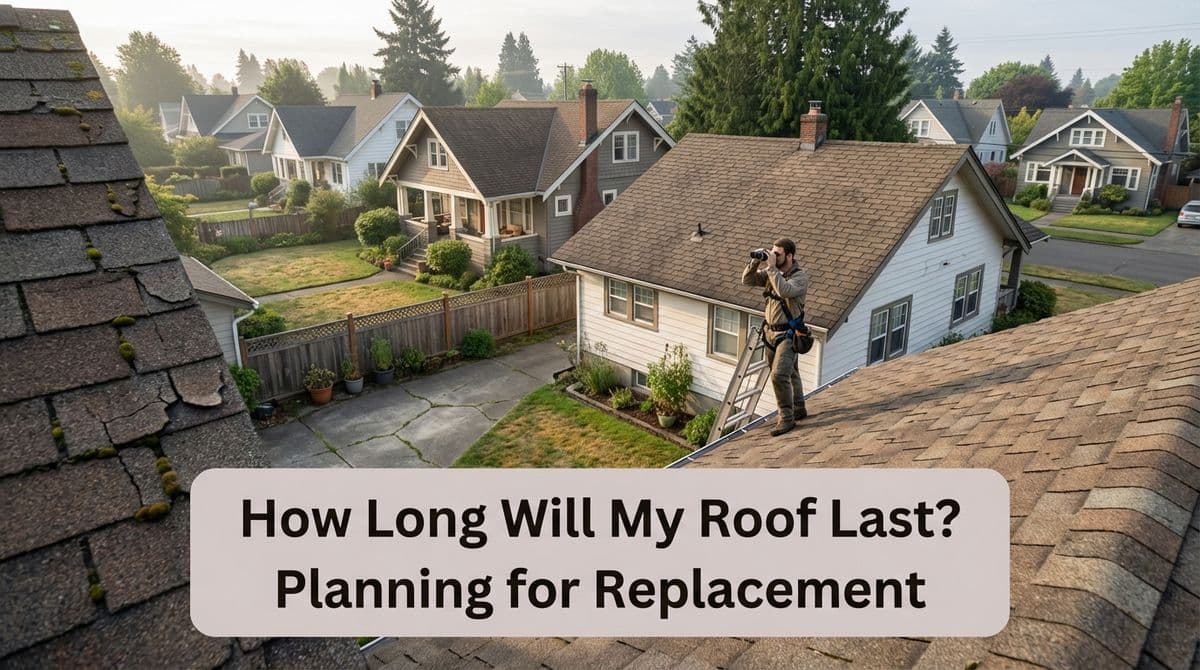
“How Long Will My Roof Last?” A Call That Got Us Talking
We recently got a call from a homeowner — let’s call him Mark — who had a great question. We’d installed his roof about 18 years ago through his builder, and he was trying to plan ahead.
Mark told us he was looking at the next chapter of life and wanted to know two things:
- What kind of underlayment we used back then
- How that affects the life expectancy of his roof and when he should start budgeting for replacement
It’s a smart question, and one we wish more homeowners would ask before the roof starts leaking. So we figured we’d walk through the same things we talked about with Mark and turn it into a quick guide you can use for your own home.
What Roof Underlayment Actually Does
When Mark called, he remembered the shingles and the builder’s name, but underlayment was a bit of a mystery. That’s completely normal — most of the important roofing work is hidden once the job is done.
Underlayment is the layer installed between your roof deck (usually plywood or OSB) and the shingles. Think of it as your roof’s backup system:
- Secondary water barrier: If wind-driven rain gets under the shingles, underlayment is there to keep it off the wood.
- Extra protection in storms: In high winds or heavy snow, it adds a safety net if shingles lift or get damaged.
- Helps with fire and code compliance: Modern underlayments are part of meeting building codes and safety standards.
Years ago, many roofs used traditional felt (often called “tar paper”). Today, we often use synthetic underlayments that are more tear-resistant and more stable over time. When a homeowner like Mark calls us, we look up their project to see exactly what we used and what that means for long-term performance.
How Long Does a Typical Roof Last?
Mark’s roof was about 18 years old, which is right around the point where people start to wonder if their roof is living on borrowed time. Here’s a general guideline we shared with him:
- Standard asphalt shingles: Often 18–25 years in our climate when properly installed and ventilated.
- Architectural / laminated shingles: Commonly 25–30+ years, again depending on conditions.
- Premium or impact-resistant shingles: Can reach 30+ years with good maintenance.
Underlayment doesn’t usually set the “headline” lifespan the way shingles do, but it does affect how your roof ages. A high-quality, properly installed underlayment helps protect the deck over time, which can mean fewer surprises if you do need a replacement later.
The key takeaway we shared with Mark: at 18 years, your roof isn’t automatically “done,” but you should be paying attention, especially if you’ve had hail, high winds, or ice dams over the years.
Factors That Shorten Roof Life
Two roofs with the same shingles and underlayment can age very differently. Some of the biggest roof “lifespan killers” we see include:
- Poor attic ventilation: Trapped heat cooks shingles from below and can warp the roof deck.
- Clogged gutters: Water backs up under shingles and along the eaves, leading to rot and leaks.
- Storm damage: Hail bruises shingles; wind can lift or break them, opening paths for water.
- Improper installation: Missing underlayment, wrong nailing pattern, or bad flashing speeds up failure.
- Neglected small leaks: A tiny stain on the ceiling often means water has been sneaking in for a while.
When we look at an 18–20-year-old roof like Mark’s, we’re not just asking “how old is it?” We’re asking, “what has it been through?”
When Should You Start Budgeting for a New Roof?
Mark’s main concern was timing. He didn’t necessarily want to replace the roof right away; he just didn’t want to be blindsided.
Here’s the rule of thumb we shared with him, which works for most asphalt-shingle roofs:
- Year 0–10: Just keep an eye out for obvious damage, but no need for serious budgeting yet.
- Year 10–15: Start a roof savings fund so you’re ready when the time comes.
- Year 15–20: Get a professional inspection every couple of years and plan for possible replacement in the next 5–7 years.
- Year 20+: If it hasn’t been replaced, assume it’s near end-of-life and budget accordingly.
For Mark, with an 18-year-old roof, we recommended a full inspection and suggested he assume a replacement sometime in the next 3–7 years, depending on what we find. That doesn’t mean the roof will fail tomorrow — it just means he won’t be caught off guard if a storm tips it over the edge.
How We Evaluate Your Roof’s Remaining Life
When someone calls us with a question like Mark’s, the next step is usually an on-site visit. During an inspection, here’s what we typically check:
- Shingle condition: Granule loss, curling, cracking, and missing shingles all tell us how age and weather have treated the roof.
- Flashing and penetrations: We look around chimneys, skylights, vents, and valleys for cracks, gaps, or rust.
- Deck movement: Soft spots underfoot can indicate damaged or rotted decking beneath the shingles and underlayment.
- Attic side: From inside, we check for stains, mold, damp insulation, and signs of poor ventilation.
- Gutters and edges: We look for shingle granules, sagging gutters, and evidence of ice-dam issues.
Putting all that together, we can usually give you a realistic estimate: is this a “you’re fine for a while” roof or a “let’s get a plan in place soon” roof?
Maintenance Tips to Help Your Roof Last Longer
One thing we tell homeowners like Mark is that a little bit of routine care can squeeze extra years out of a roof. A few simple habits make a big difference:
- Keep gutters clean: Clear them at least twice a year so water can drain properly.
- Trim overhanging branches: Reduce debris buildup and prevent branches from scraping or falling on the roof.
- Check your attic ventilation: Make sure soffit and roof vents are open and not blocked by insulation.
- Schedule periodic inspections: Have a professional check things out after major storms and every few years as the roof ages.
These steps don’t replace good installation or quality materials, but they absolutely help your roof reach its full potential lifespan.
Thinking About Selling? Roof Condition Matters
Mark also mentioned that he was looking ahead to possibly selling his home, and that’s another reason he wanted to understand his roof’s life expectancy. A tired, end-of-life roof can be a sticking point in a sale.
Here’s how your roof can affect selling:
- Buyer confidence: A newer or well-documented roof is a big reassurance to buyers.
- Inspection negotiations: If an inspector flags the roof as “near the end of its life,” buyers may ask for a price reduction or a replacement credit.
- Insurance questions: Some insurers are hesitant about older roofs, which can complicate a closing.
If you’re thinking about selling in the next few years, it’s worth getting clarity now. An inspection and a written report on your roof’s condition can help you decide whether to replace beforehand, offer a credit, or simply be prepared for what comes up during the buyer’s inspection.
Not Sure Where Your Roof Stands? Start With Information
Mark’s phone call started with a simple question about underlayment, but what he really wanted was predictability — to know what’s likely coming so he could plan his budget and his timeline.
If your roof is in that 15–25-year range and you’re wondering how much longer it will last, the best first step is to get eyes on it. We can look up your past project if we installed it, evaluate the current condition, and give you an honest opinion about how much life is left and when to start setting money aside.
You don’t have to wait for a leak to find out how your roof is doing. A little information now can save a lot of stress later.