Snow, Skylights & Roof Leaks: Finding the Real Winter Problem
Snow around skylights can reveal deeper roof problems. Learn why custom skylights often leak in winter and how roofers track down and fix the real issue.
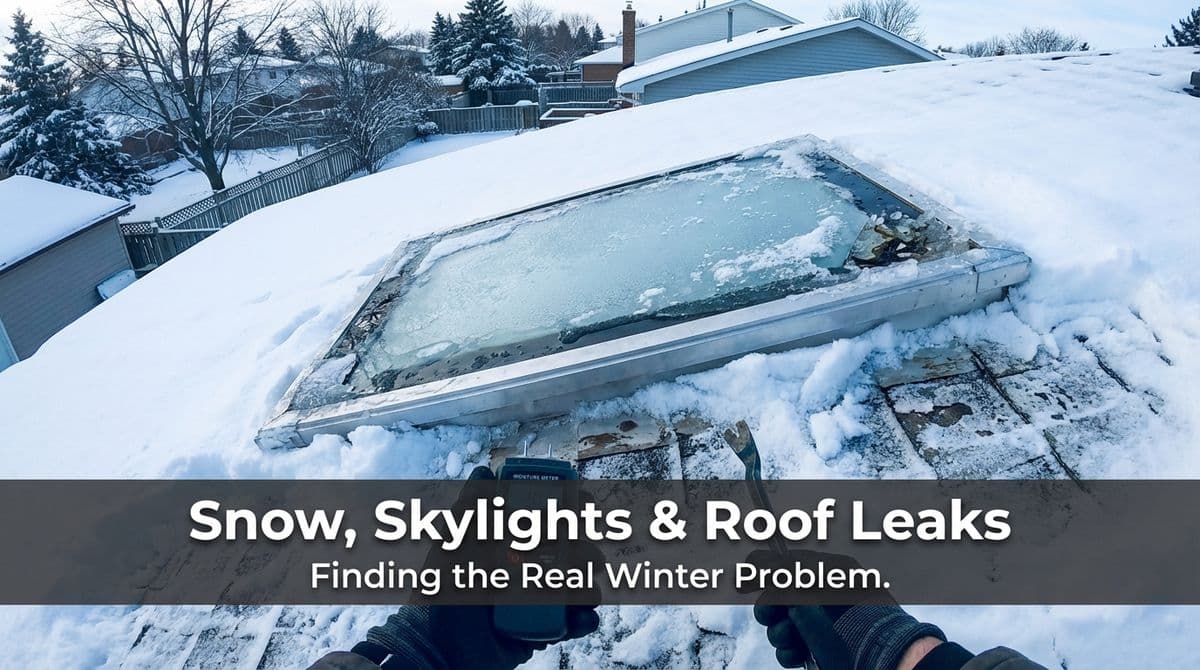
Snow, Skylights, and a Mysterious Winter Leak
We recently got a call from a customer — let's call him Mark — who lives up in the mountains and had just gotten about six inches of fresh snow. Earlier in the summer, we’d been out to work on his skylights, replacing the seals around the glass. Everything looked tight and dry through the fall.
But after this first decent winter storm, Mark noticed water showing up around his custom-built skylights. The strange part? The leak seemed to stop once the initial snow melted a bit, and he wasn’t sure if it was coming from the glass seals we had worked on or from the base where the skylight frame meets the roof.
Mark did exactly what we wish more homeowners would do: he called right away, while the leak was fresh in his mind, and asked us to come back out when the weather cleared so we could diagnose the real source of the problem and also get him a quote on fully redoing those skylights.
Why Skylights Leak More Often in Winter
Whenever someone calls about a skylight leak in winter, we automatically start thinking beyond just the visible glass and seals. Snow and ice introduce a few unique challenges that can make a skylight that seemed fine in summer suddenly start leaking:
- Snow buildup and ice dams: Snow piles up around the uphill side of the skylight. As it melts and refreezes, ice can form a dam that forces water to back up under shingles and flashing.
- Freeze–thaw movement: Roof materials expand and contract as temperatures swing. Tiny gaps that weren’t an issue in August can open just enough in January for water to find its way in.
- Wind-driven snow: Snow blowing sideways can work its way into any weak spot in framing, flashing, or old caulking that would never see that kind of exposure in warmer seasons.
With custom-built skylights like Mark’s, we also have to think about how the carpenter or original builder tied the skylight curb (the framed box around the skylight) into the roof system. Even if the glass and gasket are brand new, water can still sneak in where the curb meets the shingles if the flashing wasn’t done correctly.
Custom-Built Skylights vs. Factory Units
Mark’s home has custom-built skylights, which are common in older mountain homes and in unique architectural designs. They can look great, but they also come with some built-in risk factors:
- No factory-integrated flashing kit: Modern skylights usually come with a matched flashing system designed and tested for water tightness. Custom units rely entirely on whoever built and flashed them.
- Site-built curbs: The wooden curb that the skylight sits on might not be perfectly square, level, or tall enough for heavy snow conditions.
- Layered repairs over the years: We often see multiple generations of caulk, patches, and added metal — each one trying to fix the last leak but sometimes making the water path more complicated.
That’s why, in Mark’s case, we weren’t surprised that replacing just the glass seals helped but didn’t completely solve his winter leak. The problem may be lower down, at the base where the frame meets the roof line — exactly what he suspected when he called.
How We Diagnose a Winter Skylight Leak
When the weather cooperates and we can safely get on the roof, here’s how we typically approach a situation like Mark’s:
- Start inside: We look at the ceiling and drywall around the skylight. Stains, bubbling paint, or damp trim can tell us roughly where water is entering and how long it’s been happening.
- Check the glass and seals: We inspect the gasket around the skylight glass and the frame joints for cracks, failed caulk, or gaps.
- Inspect the curb and flashing: Outside, we look closely at the base of the skylight — where the curb ties into the shingles and underlayment. Any exposed fasteners, lifted shingles, or poorly overlapped flashing is a red flag.
- Evaluate the roof layout: We look uphill from the skylight to see how snow and water travel. Valleys, changes in pitch, or nearby chimneys can contribute to ice dams and backup.
- Replicate water flow (when safe): In dry weather, we may carefully run water on specific areas of the roof to see where it shows up inside, working from the bottom up.
The goal isn’t just to stop a leak; it’s to understand the leak — exactly where water is entering and how it’s moving. That’s what allows us to tell a homeowner honestly whether a repair is enough, or if it’s time to rebuild or replace the skylight system altogether.
Repair vs. Replacement: What We Told Mark
On calls like Mark’s, we usually present a couple of paths once we’ve inspected everything:
- Targeted repairs: If the skylight is structurally sound and relatively modern, we might be able to reseal, reflash, or add ice-and-water shield in key areas.
- Full skylight replacement: If the unit is old, custom, or has recurring issues, we often recommend replacing it with a modern factory skylight and full flashing kit.
For many homeowners, replacement sounds intimidating, but modern skylights are a big step up from older custom builds. Today’s options often include:
- Better insulation and glazing: Double or triple-pane glass with low-E coatings to reduce heat loss and condensation.
- Factory-engineered flashing: Systems designed and tested to shed water properly in real-world conditions.
- Ventilating units: Some skylights can open to vent moisture, which helps in bathrooms, kitchens, and loft areas.
In Mark’s case, he’d already asked for a quote on redoing the skylights because he suspected ongoing issues. That’s often a wise move for homeowners in heavy-snow areas: instead of chasing small leaks every winter, invest once in a properly designed, properly flashed system.
Preventing Skylight Leaks Before Winter Hits
You can’t control the weather, but you can stack the odds in your favor before the snow flies. Here are a few practical steps we recommend to homeowners every fall:
- Inspect from the inside: Look around every skylight for fresh stains, peeling paint, or spots that feel damp after a storm.
- Clean the glass and frame: From inside, clean the interior frame and glass so you’ll spot new moisture quickly.
- Check your attic or ceiling cavity: If accessible, look for damp insulation, moldy smells, or darkened wood around the skylight shaft.
- Schedule a professional roof check: Have a roofer inspect the skylight flashing, shingles, and surrounding roof, especially if your roof is 15+ years old or you’re in a high-snow area.
- Address ice dam risks: Improve attic insulation and ventilation to reduce heat escaping through the roof, which helps minimize ice dams around skylights.
These small steps don’t replace a professional inspection, but they help catch issues early, before you’re putting pots and towels down in the middle of a storm.
What to Expect During a Skylight Service Visit
Homeowners often tell us they hesitate to call because they’re not sure what a skylight visit will involve. In most cases, here’s what you can expect when we come out for a situation like Mark’s:
- Initial conversation: We’ll ask when you first noticed the leak, what the weather was like, and whether it happens every storm or only during certain conditions.
- Interior inspection: We’ll look at the inside around the skylight, sometimes using moisture meters to see how far the water has spread.
- Exterior roof inspection: When it’s safe, we’ll get on the roof to inspect the skylight, flashing, and surrounding shingles.
- Photos and explanation: We take photos and walk you through what we see in plain language so you’re not guessing what you’re paying for.
- Clear options and pricing: You’ll get a straightforward recommendation — maybe a repair, maybe a replacement — along with transparent pricing so you can decide what makes sense.
Our goal is the same with every call like Mark’s: figure out where the water is really coming from, explain your options clearly, and help you choose a solution that will hold up to many winters of snow, thaw, and wind.
Worried About Your Own Skylights This Winter?
If you’re seeing water spots, dripping, or even just suspicious staining around your skylights after a snowstorm, don’t wait and hope it goes away. Like with Mark’s home, leaks that show up with snow are often pointing to a deeper issue at the skylight base or flashing — not just the glass.
Have a roofer take a look as soon as the weather allows. A careful inspection now can prevent bigger roof and drywall repairs later, and if it turns out your skylight system is ready for an upgrade, you’ll have time to plan it before the next round of storms rolls through.