How to Spot Early Signs of Tile Roof Damage
See how one homeowner’s “couple cracked tiles” helped us explain the early warning signs of tile roof damage before it turns into a costly leak.
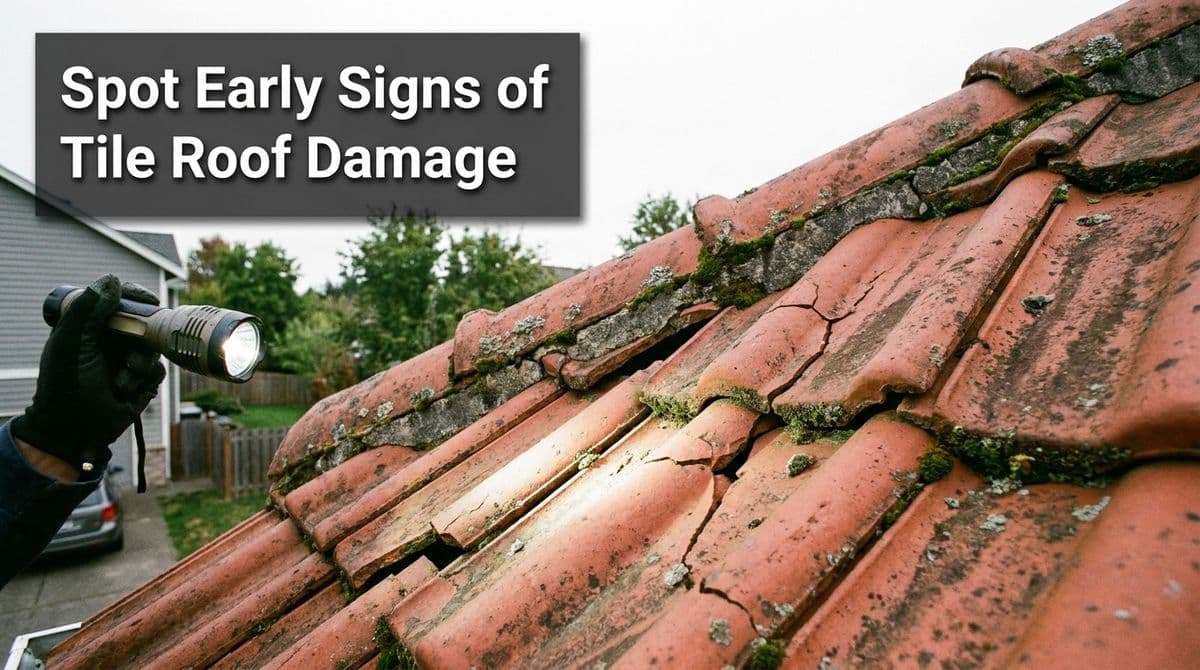
A Quick Call About “Just a Few Cracked Tiles”
We recently got a call from a customer — let’s call him Jason — who had been out on his balcony after a stretch of heavy rain. From that higher vantage point, he noticed a couple of cracked tiles and one tile that looked like it had shifted. He could actually see the underlayment peeking through.
Jason told us he wasn’t seeing any leaks inside the house yet, but he didn’t want things to “get out of hand.” That mindset is exactly why we love these calls. By the time a tile roof actually leaks into your living room, the damage under the surface has often been building for months or even years.
Using Jason’s situation as an example, we want to walk you through how to spot early signs of tile roof damage before they turn into a full-blown leak.
Why Tile Roofs Hide Problems So Well
When we met Jason at his home, we explained that one of the strengths of tile roofs — their durability and layered construction — is also what allows hidden problems to develop. The tiles themselves are just the outer shell; what really keeps water out is the underlayment and flashing underneath.
That means you can have issues with tiles for a while before you ever see a water stain on your ceiling. The key is catching those issues on the surface early, the way Jason did from his balcony.
1. Visible Cracked or Broken Tiles
The first thing Jason noticed was exactly what we tell homeowners to look for: cracked or broken tiles. Even small hairline cracks can let water, UV light, and freeze–thaw cycles start breaking down the underlayment below.
From the ground (or safely from a balcony like Jason’s), you can often spot:
- Clean, straight cracks down the middle of a tile
- Chipped corners or missing pieces
- Fully broken tiles where part of the tile has slipped or fallen
If you see any of these, it’s worth having us (or another qualified roofer) come out for a closer look. Replacing a few tiles early is far cheaper than replacing rotted decking or interior drywall later.
2. Tiles That Look Shifted or “Out of Place”
Jason also mentioned one tile on the lower level that looked “moved out,” where he could see the layer underneath. That’s another early warning sign we always look for during inspections.
Here’s what we suggest you watch for when you look at your tile roof:
- Uneven rows where one tile looks lower or higher than its neighbors
- Gaps between tiles where you can see underlayment or roof deck
- Tiles sliding down toward the eave or gutter
Tiles can shift from wind, improper installation, or even someone walking on the roof incorrectly. Once there’s a gap, water can hit the underlayment directly, shortening its life and eventually leading to leaks.
3. Exposed or Damaged Underlayment
When Jason said he could “see the whatever’s before the tiles,” we knew right away he was talking about the underlayment</strong. We explained to him that this felt or synthetic layer is the real waterproof barrier.
If you can see underlayment from the ground or a balcony, that tells us something has already gone wrong — usually a slipped or broken tile. From there, we check for:
- Underlayment that looks wrinkled, torn, or brittle
- Dark spots or staining, which can indicate prolonged moisture
- UV damage from being exposed to the sun
Underlayment isn’t designed to be exposed for long. Catching it early, the way Jason did, often means we can repair or reinforce small areas instead of tearing off whole sections of the roof.
4. Subtle Clues Inside the Home
Even though Jason hadn’t noticed any leaks yet, we still asked a few key questions we ask every tile-roof homeowner:
- Any faint brown spots on ceilings or upper walls?
- Any peeling paint or bubbling texture near the ceiling line?
- Any musty odors in upstairs rooms or attic spaces after rain?
These subtle signs can show up before you see an obvious drip. If you notice them, especially in the same area where you see damaged tiles outside, it’s a strong signal to schedule an inspection soon.
5. What We Do During a Tile Roof Check-Up
For Jason, we scheduled our residential service manager to come out the next day, just like we do for any customer who spots early issues. During that kind of visit, we typically:
- Walk the roof carefully using proper techniques so we don’t crack additional tiles
- Document all visible tile damage with photos
- Inspect flashings, valleys, and penetrations (chimneys, vents, skylights)
- Check the underlayment condition where tiles are damaged or shifted
Then we sit down with you — as we did with Jason — and explain what we found, what needs attention now, and what can safely wait, if anything.
Simple Habits to Catch Problems Early
To keep your tile roof in good shape and avoid surprise leaks, we recommend:
- Seasonal visual checks from the ground or balcony, especially after storms
- Never walking on the roof yourself unless you’re trained; tiles can crack underfoot
- Scheduling a professional inspection every few years, or sooner if you spot damage
- Addressing small repairs quickly instead of waiting for a leak
Jason called us before there was water in his home, and that decision likely saved him a lot of money and stress. If you’re seeing cracked, broken, or shifted tiles — or exposed underlayment — we’re always happy to come out, give you an honest assessment, and help you take care of it while it’s still a small issue.