Wind Damage on Older Mountain Roofs: Repair vs. Replacement
Mountain winds are hard on older, discontinued roofs. Learn when careful repairs make sense, and when full replacement is the smarter long-term move for your mountain home.
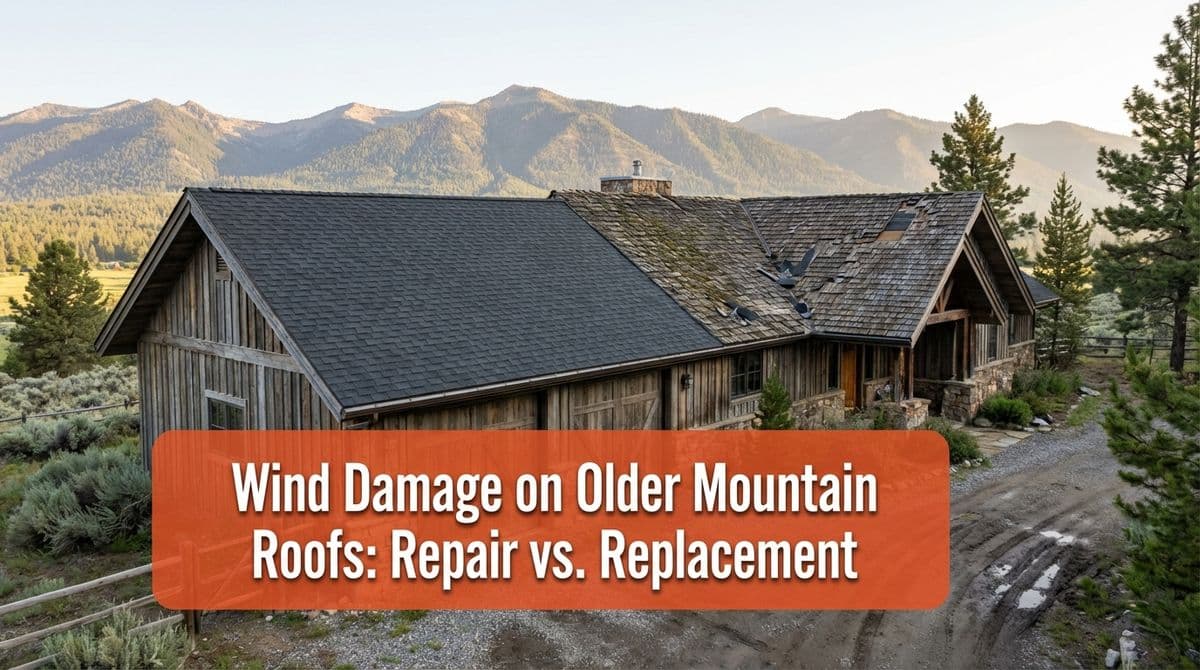
When Mountain Winds Hit an Older Roof (Again)
We recently got a call from a customer — let’s call him Mark — who lives up in the foothills in a mountain home with a concrete shingle roof. After the latest windstorm rolled through, he noticed damage in almost the exact same spot we’d repaired for him a few years back.
His first words (after some kind compliments about our last visit) were basically: “I’ve got this weird concrete shingle that I don’t think even exists anymore… and the idea of a whole roof replacement isn’t financially possible right now. What can we do?”
That question — repair options vs. full replacement on older or discontinued roofing materials — comes up a lot with our mountain customers after wind events. Let’s walk through how we think about it when we’re standing on a roof like Mark’s, feeling that mountain breeze and staring at missing or loose shingles.
Why Mountain Roofs Take Such a Beating
Mountain and foothills homes see conditions that are much tougher than what we deal with on the flats:
- Higher wind speeds funneling through canyons and over ridgelines
- More freeze–thaw cycles that loosen fasteners and open up small gaps
- Driving snow and debris that can lift and flex shingles over time
On an older roof — especially one with concrete, fiber-cement, or other now-discontinued shingles — every big wind event can reveal the weak spots. In Mark’s case, a patch we did several years ago held up nicely for a while, but surrounding shingles and some of the patched-in pieces finally loosened again after this latest storm.
Step One: Assessing Wind Damage on Older or Discontinued Materials
When we come out to a home like Mark’s, we’re looking at more than just the obvious missing pieces. A thorough wind-damage check on an older or discontinued roof usually includes:
- Shingle condition: Cracks, chips, surface erosion, and brittleness when we lift an edge.
- Attachment: Loose, uplifted, or rocking shingles when pressure is applied.
- Pattern of damage: Is it confined to one slope or corner, or spread across multiple planes?
- Underlayment and flashing: Any tearing, exposure, or gaps where water can get in.
- Previous repair areas: How well past patches have held and whether they’re now the weak link.
With older or discontinued products, we also ask a key question early on: Can we still get matching or compatible material? That answer heavily influences whether a repair is sensible or if we’re approaching the point where replacement is the better long-term move.
Repair Options When Your Roofing Material Is Discontinued
In many cases, like Mark’s, a full roof replacement just isn’t in the budget right after a storm — and honestly, it’s not always necessary. Here are the main repair paths we walk through with mountain homeowners who have older or discontinued roofs:
1. Spot Repairs With Salvaged or Stockpiled Shingles
Sometimes we’re lucky: either you have a small stash of extra shingles from the original installation, or we’ve saved usable pieces from previous work on your roof. When that happens, we can:
- Replace a limited number of broken or missing shingles in the damaged area
- Re-secure any loose pieces with proper fasteners and sealants
- Reinforce vulnerable edges and corners where wind tends to catch
This is often the most cost-effective option, especially if the damage is localized and overall roof condition is still fair.
2. Targeted “Best-Match” Repairs
When the original material is truly no longer available, we sometimes use a similar weight, thickness, and color shingle in less-visible areas:
- Replace damaged pieces in a back slope or less prominent section with the best available match
- Use careful layout to avoid a patchwork look from the street
- Focus on weather-tightness first, cosmetics second
We’re always upfront that this won’t be perfect, visually. But functionally, it can buy you more years of service while you plan for an eventual full replacement.
3. Temporary Weatherproofing When We Can’t Fully Repair
If the roof is at the end of its life or damage is too scattered to repair properly, we can still often:
- Secure flapping or uplifted areas to prevent further breakage
- Install underlayment patches or peel-and-stick membranes in exposed spots
- Add temporary flashing or sealant where water intrusion is most likely
This approach is about stopping leaks and buying time until a full replacement is feasible.
When a Full Roof Replacement Starts to Make More Sense
We know “full replacement” can be a scary phrase, especially when it’s not financially possible right now like in Mark’s case. Our goal is never to push you into a new roof before you’re ready, but there are some clear signs we look for that tell us repairs are becoming band-aids:
- Widespread brittleness: Shingles crack or break easily when handled.
- Repeated wind damage in the same or multiple areas after each storm.
- Ongoing leaks despite past repairs, especially around valleys and penetrations.
- Manufacturer support is gone and materials are impossible to match or source.
- A patchwork of past repairs creating multiple weak spots.
In mountain environments, we also think about future storms. If your roof barely survives each wind event and we can see the system as a whole is near the end, we’ll talk honestly about replacement — even as we help you stabilize things short-term.
Planning Ahead: Practical Tips for Mountain Homeowners
Whether you’re in Mark’s situation now or you just know your roof is getting older, here are a few practical steps you can take:
- Save spare materials: If you ever replace part of your roof, hang on to extra shingles or tiles. They’re gold when it comes time for repairs.
- Schedule regular roof checkups after big wind events. Catching a handful of loose pieces early is far cheaper than repairing leak damage inside.
- Document damage with photos and dates in case there’s an insurance claim opportunity.
- Ask about mountain-rated products when you do replace: higher wind ratings, better fastening systems, and materials suited to freeze–thaw cycles.
- Budget for the future: If we’re seeing the end of life on an older or discontinued roof, we’ll be candid with you so you can plan a realistic timeline and budget.
How We Approach Your Roof: Honest Options, Not Pressure
When we visit a home like Mark’s, our process is simple: fully inspect the damage, explain what we see in plain language, and lay out tiered options — from short-term repairs to long-term replacement planning.
If you’re in a mountain or foothills home with an older or discontinued roofing material and the wind has you worried, we’re happy to come take a look. We’ll help you figure out what’s realistic right now, what can safely wait, and how to keep your roof protecting your home through the next storm and beyond.